Munj ceremony rituals, step by step, and the photographs to plan for each
A ritual-by-ritual guide to the Munj (Upanayan) ceremony as it's usually performed in Maharashtrian families, and the moments to plan the photography around.
A Munj (Upanayan) is a sequence of rituals, each with its own meaning, people and moments that pass in seconds. Knowing what happens next is the difference between photographs of the whole day and photographs of the moments in between. This guide walks through the rituals in the order most Maharashtrian families follow, and what we plan to photograph at each.
Every family and every priest follows the ceremony a little differently: some rituals happen the day before, some are combined, and some families add their own. Treat this as a guide and confirm the order with your priest. For the practical side of planning, such as sharing the muhurat, listing who must be photographed and choosing photo and film, see our guide to planning photography for a Munj. We have photographed more than 100 thread ceremonies, and the moments below are the ones families most often ask us not to miss.
Before the day: kelvan and mehendi
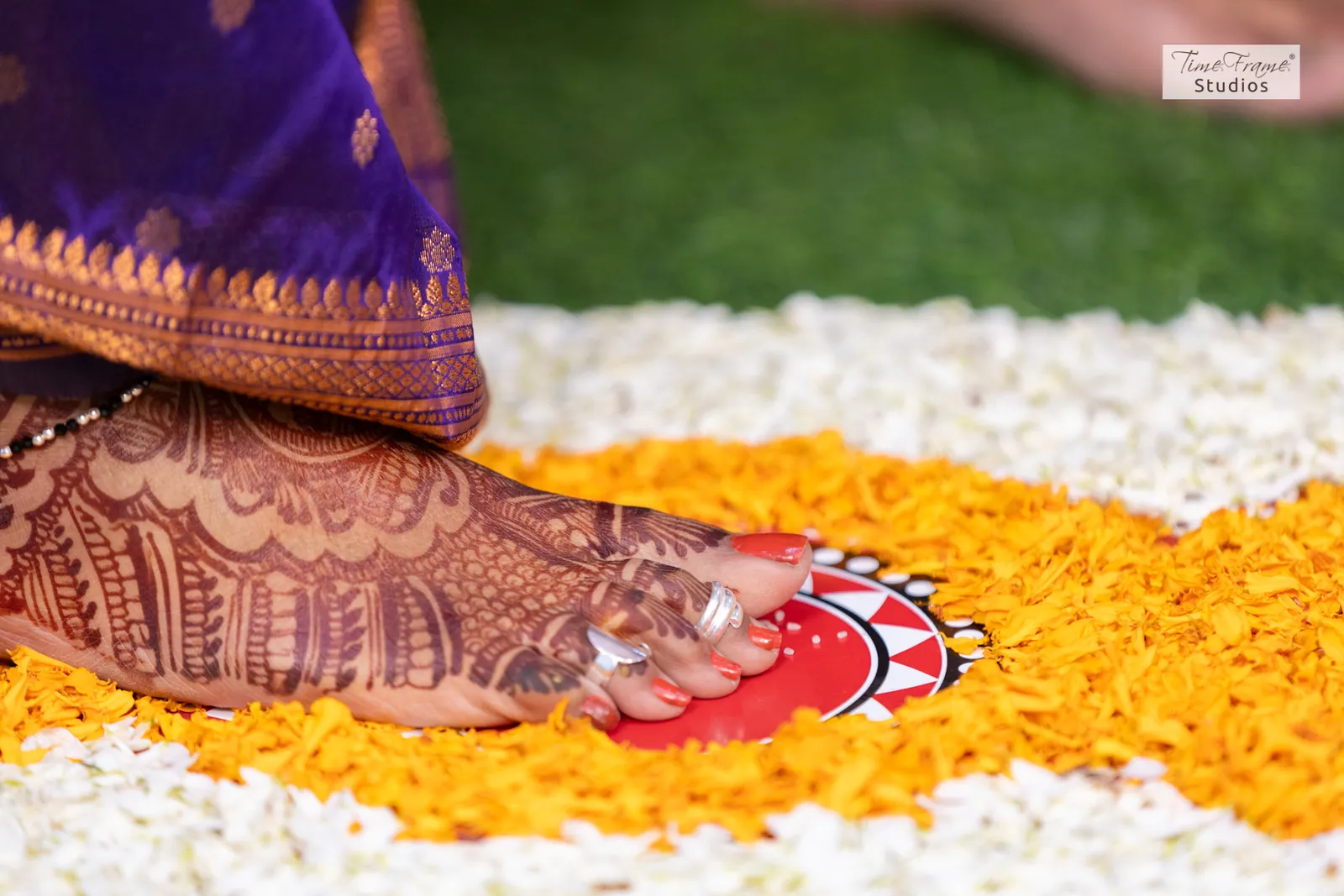
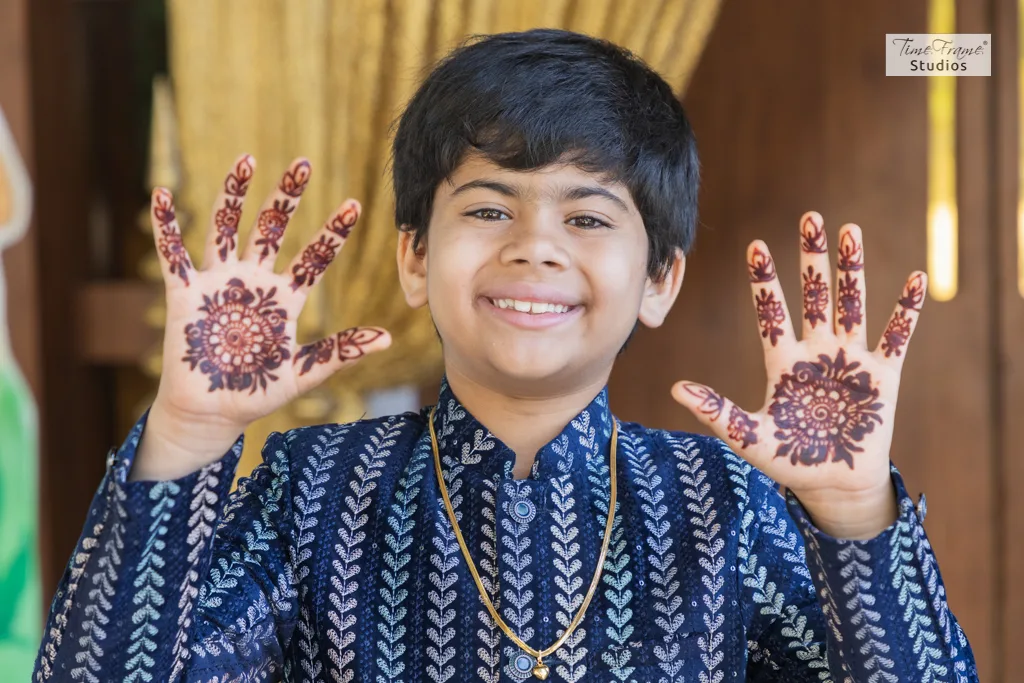
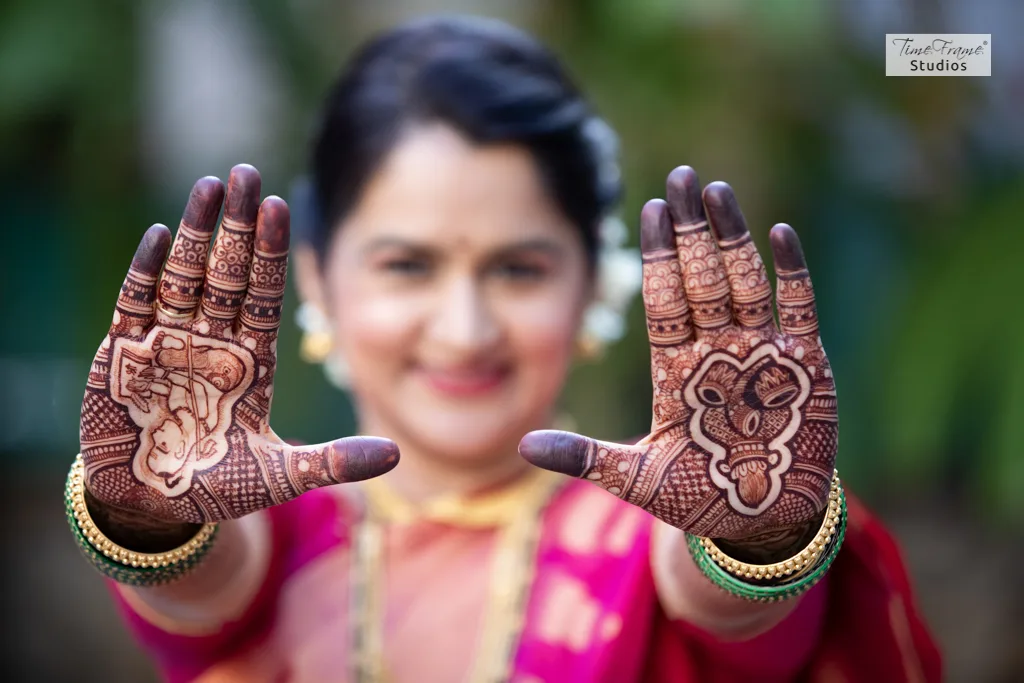
In the days before the Munj, relatives invite the boy and his parents for a kelvan, a celebratory family meal. Many families also have mehendi for the boy and the women of the family. These are relaxed, happy gatherings, and they're the easiest time for unhurried family portraits.
Photographs to plan: the boy with grandparents and cousins, hands with mehendi, the family around the meal.
Ganesh puja and the devak
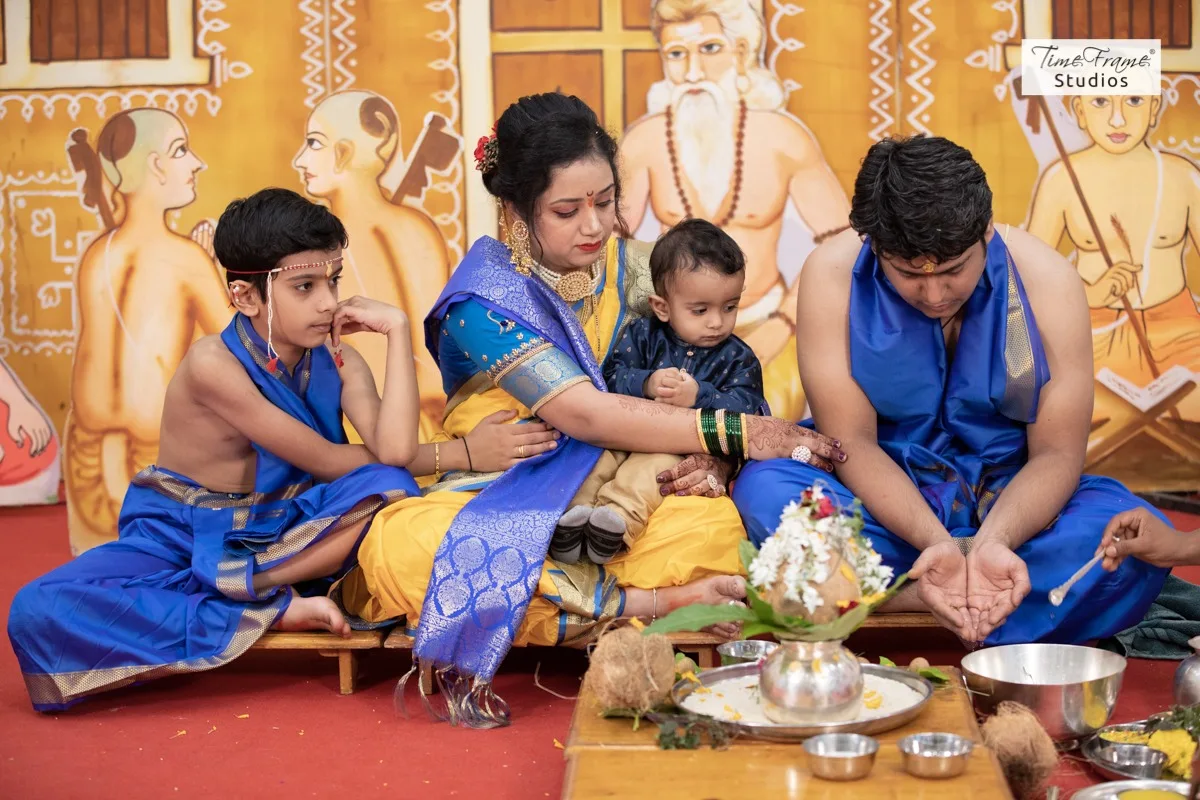
The ceremony begins, as most do, with a prayer to Ganesha, so the day goes without obstacles. Many families also install the devak, the family deity, at this stage. The boy and his parents sit together for the puja.
Photographs to plan: a wide frame of the family at the puja, the parents' hands with the ritual items, the boy's first moments in his ceremonial clothes.
The head shave and the ritual bath
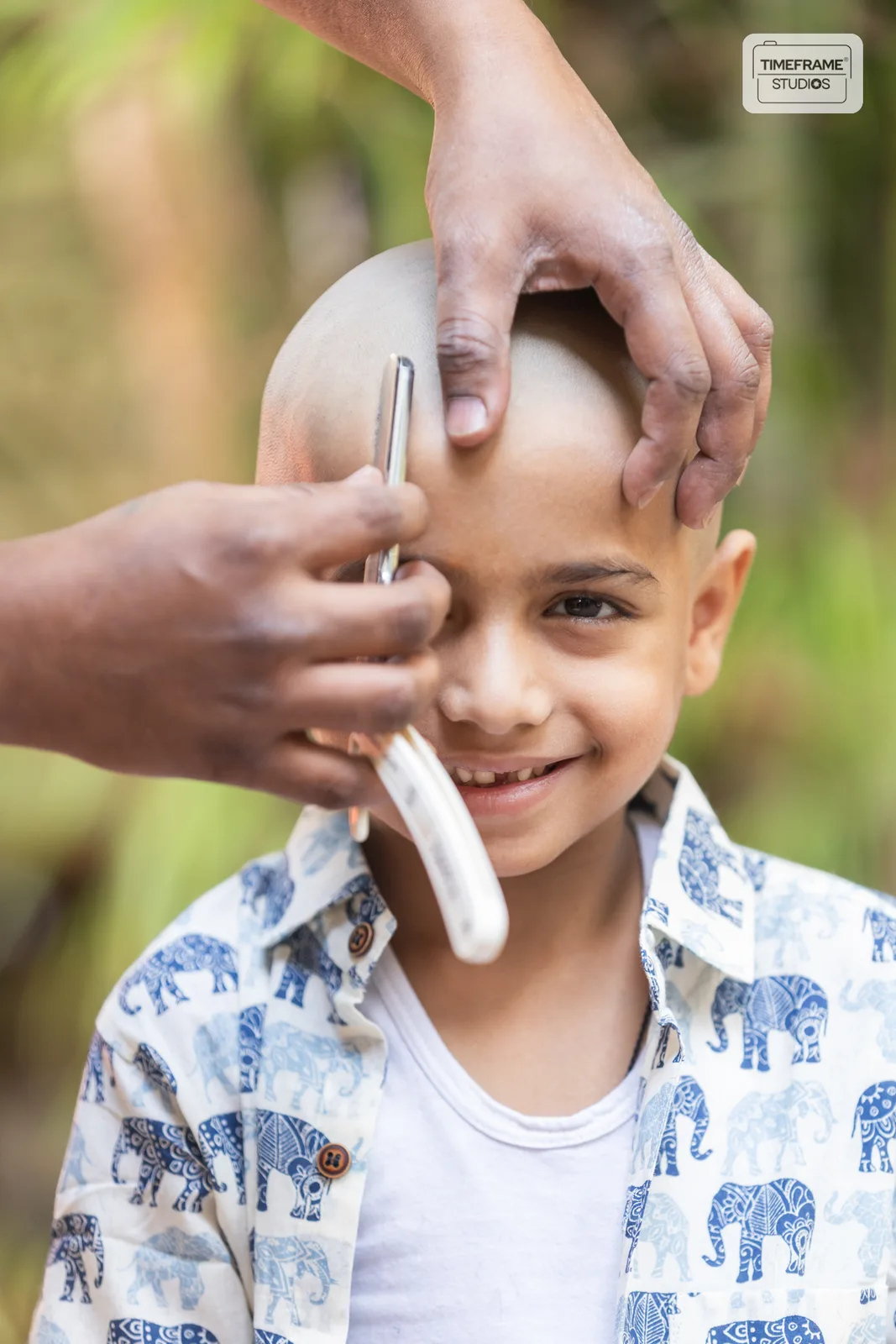
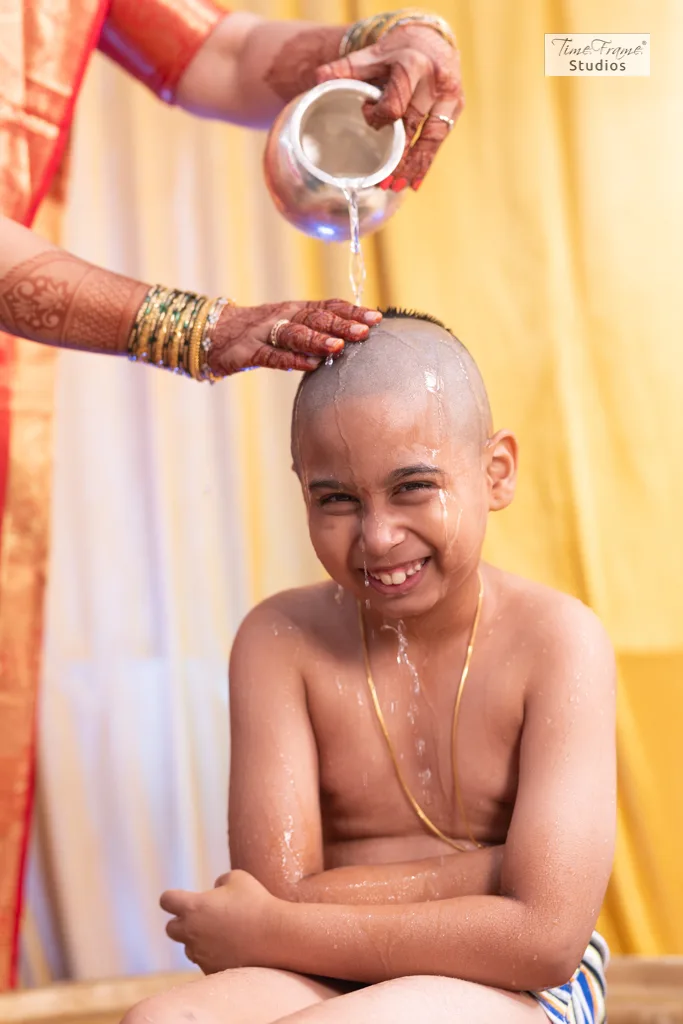
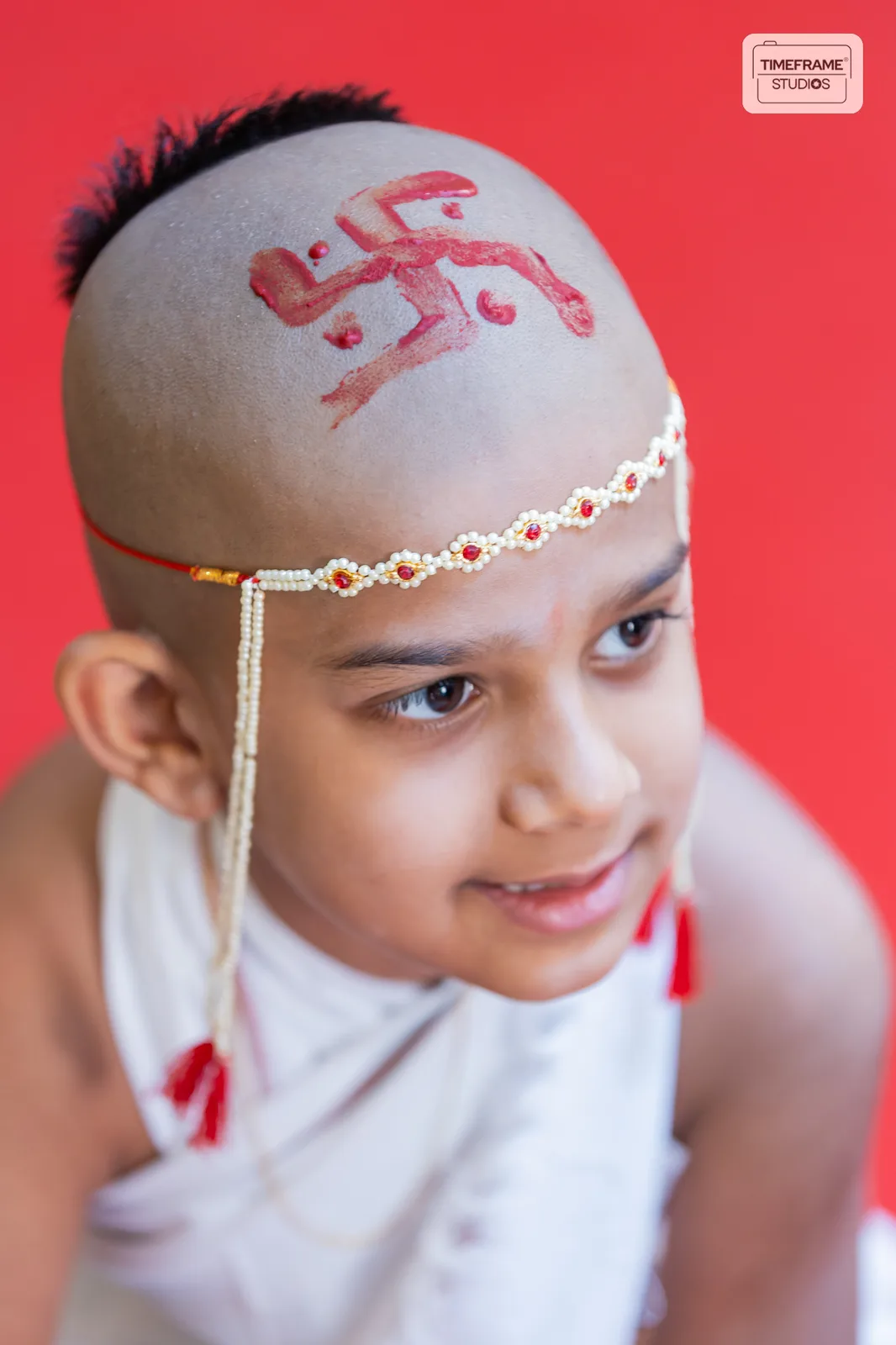
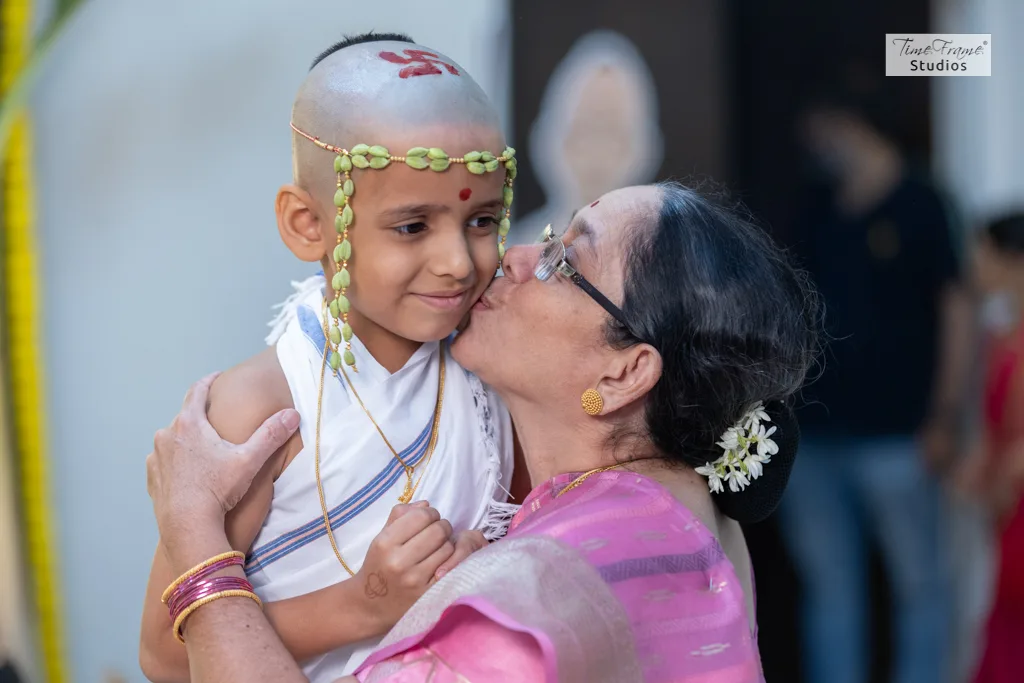
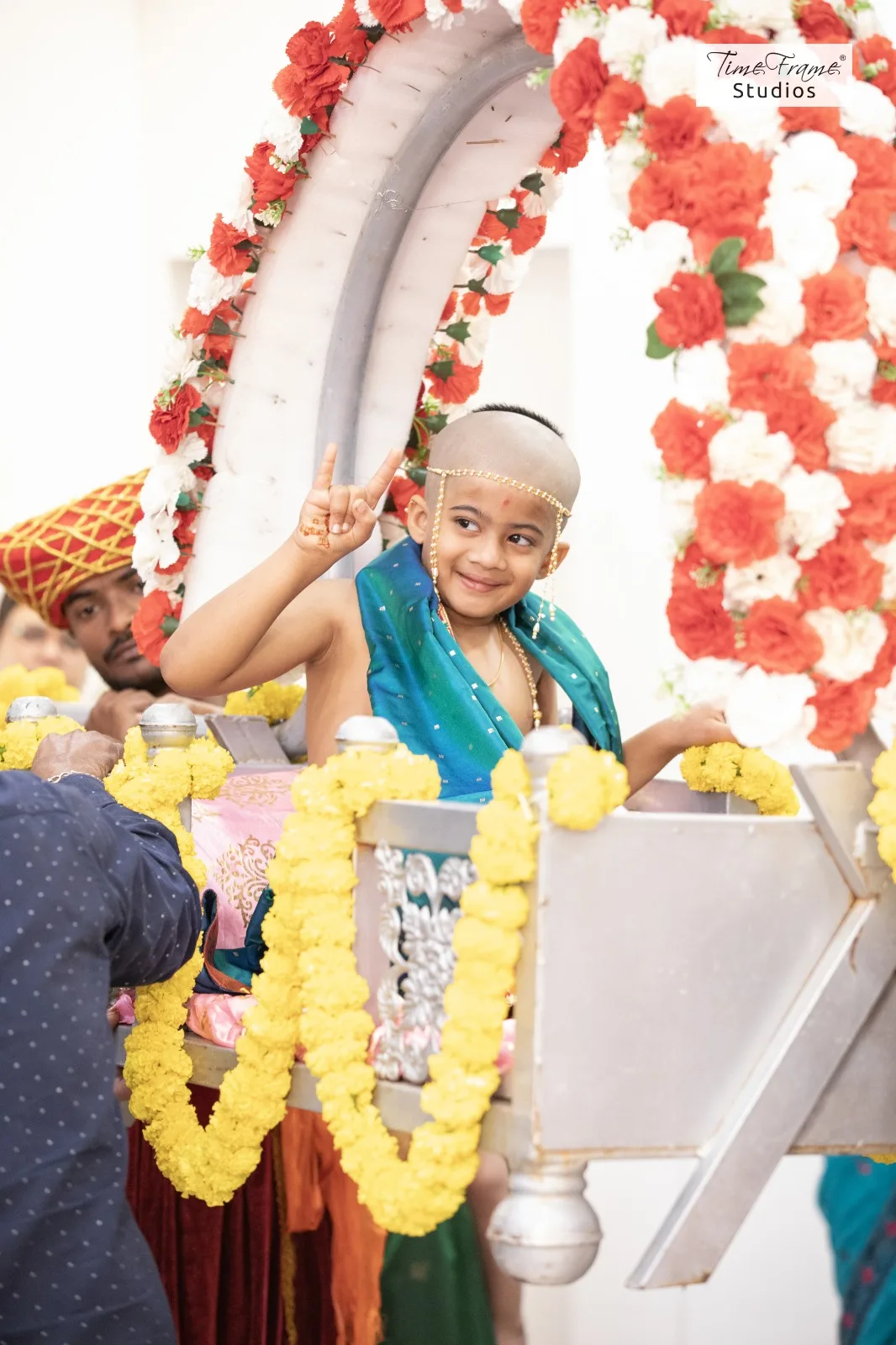
The boy's head is shaved, traditionally leaving a small tuft (the shendi), and he is given a ritual bath. Boys react very differently to this: some laugh, some are nervous, some find it hilarious afterwards. These are some of the most honest photographs of the day.
Photographs to plan: the barber at work, the boy's expression, the water poured over his head, and the swastik or tilak drawn on the newly shaved head.
Matru bhojan: the last meal with his mother
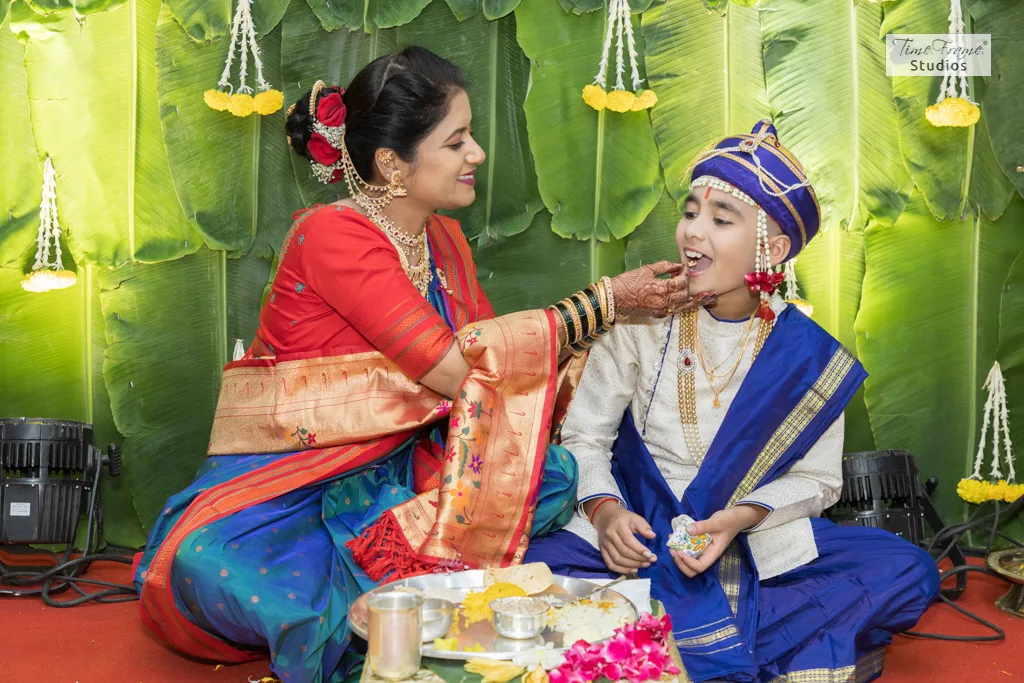
Before he becomes a brahmachari, the boy shares a last meal from the same plate as his mother, often with her feeding him. It's one of the most emotional moments of the ceremony, and it's quiet and quick.
Photographs to plan: close, from the side, without getting between mother and son. This is a moment for a long lens rather than a crowd of cameras.
Dressing: the dhoti, mekhala and staff
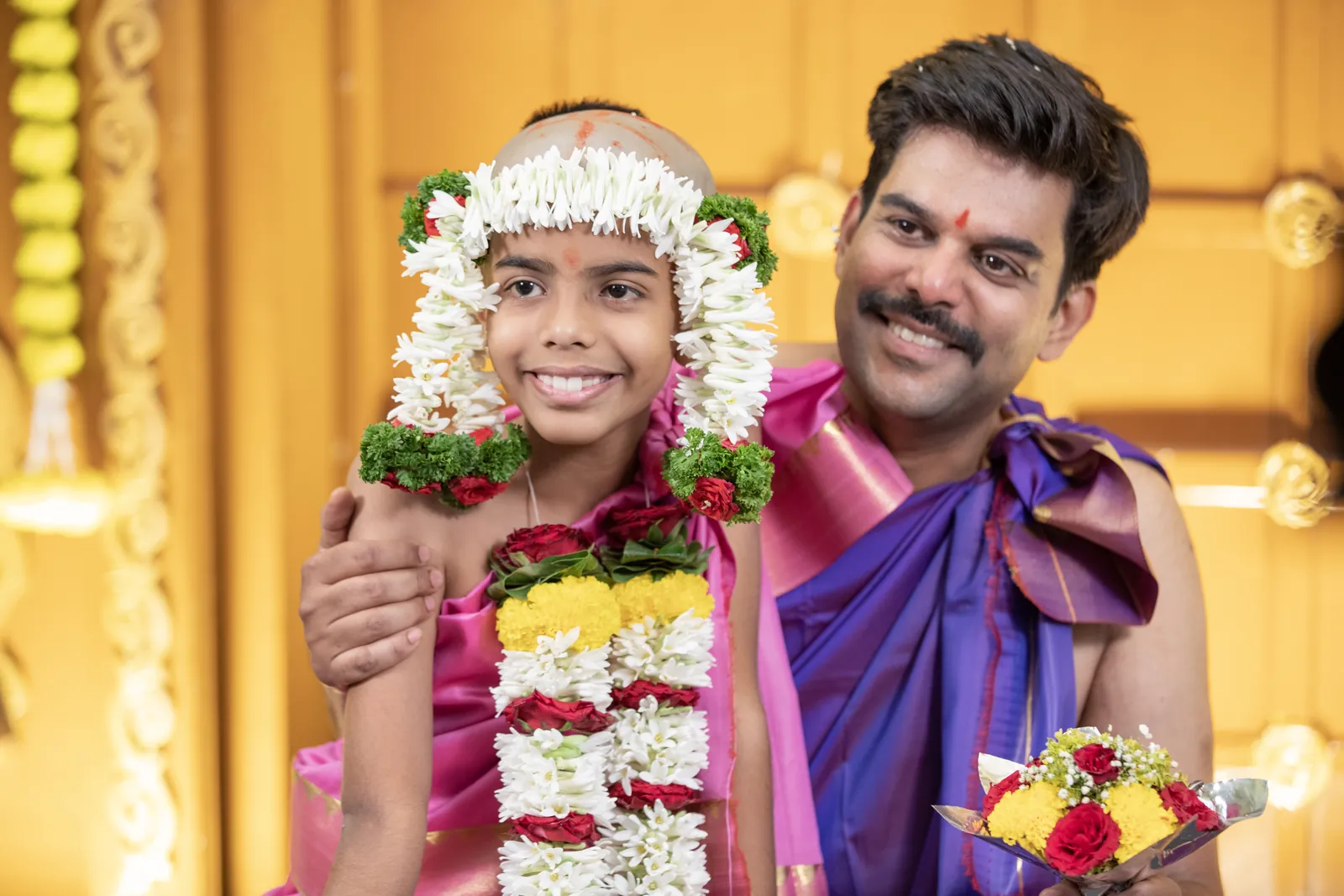
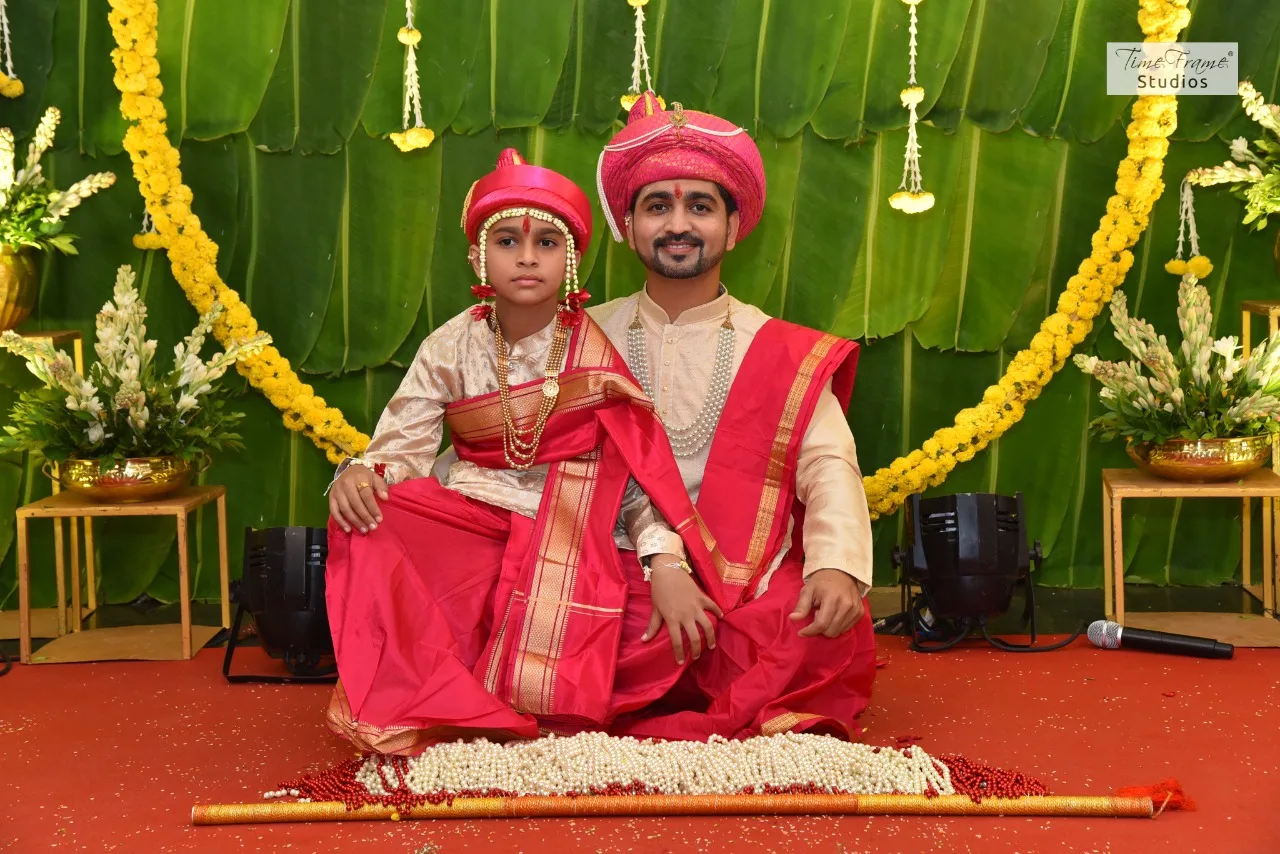
The boy is dressed in a new dhoti and uparne, and a mekhala, a girdle of munj grass, is tied around his waist. He's given a staff (danda). From here, he looks the part, and these are the first portraits of him as a brahmachari.
Photographs to plan: the girdle being tied, the boy in full ceremonial dress, a few calm portraits before the main rituals.
The sacred thread (yajnopavita)
The janeu or yajnopavita, the sacred thread, is placed over the boy's left shoulder and across his chest, with mantras from the priest. It's the central act of the ceremony, and it happens fast.
Photographs to plan: the thread being placed, the father's and priest's hands, the boy's face as it happens. We position ourselves for this before it starts.
Brahmopadesh: the Gayatri mantra
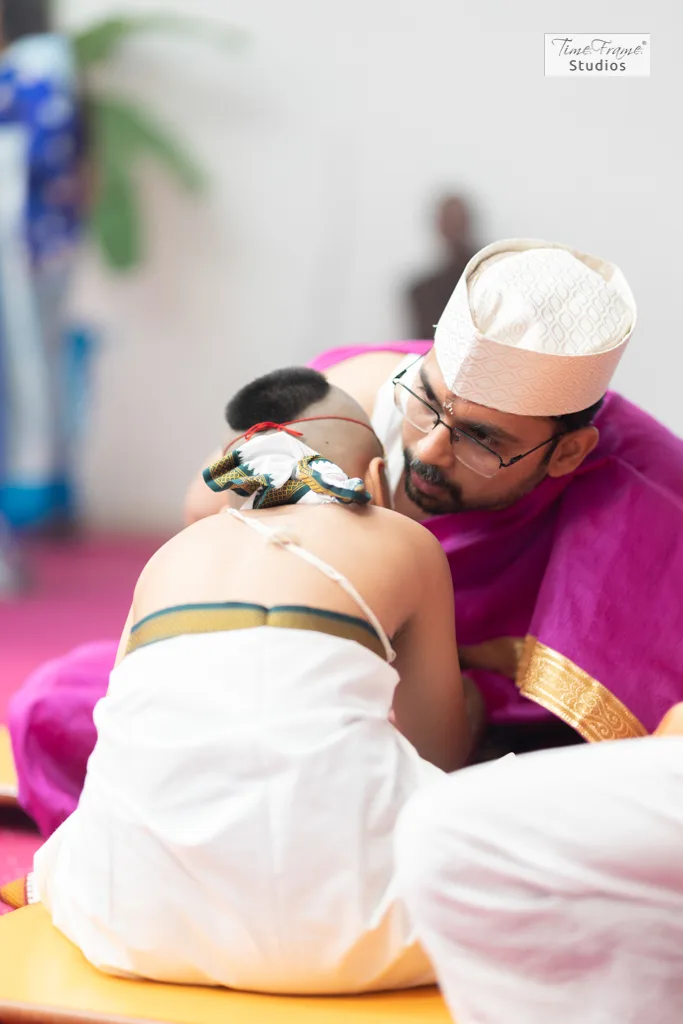
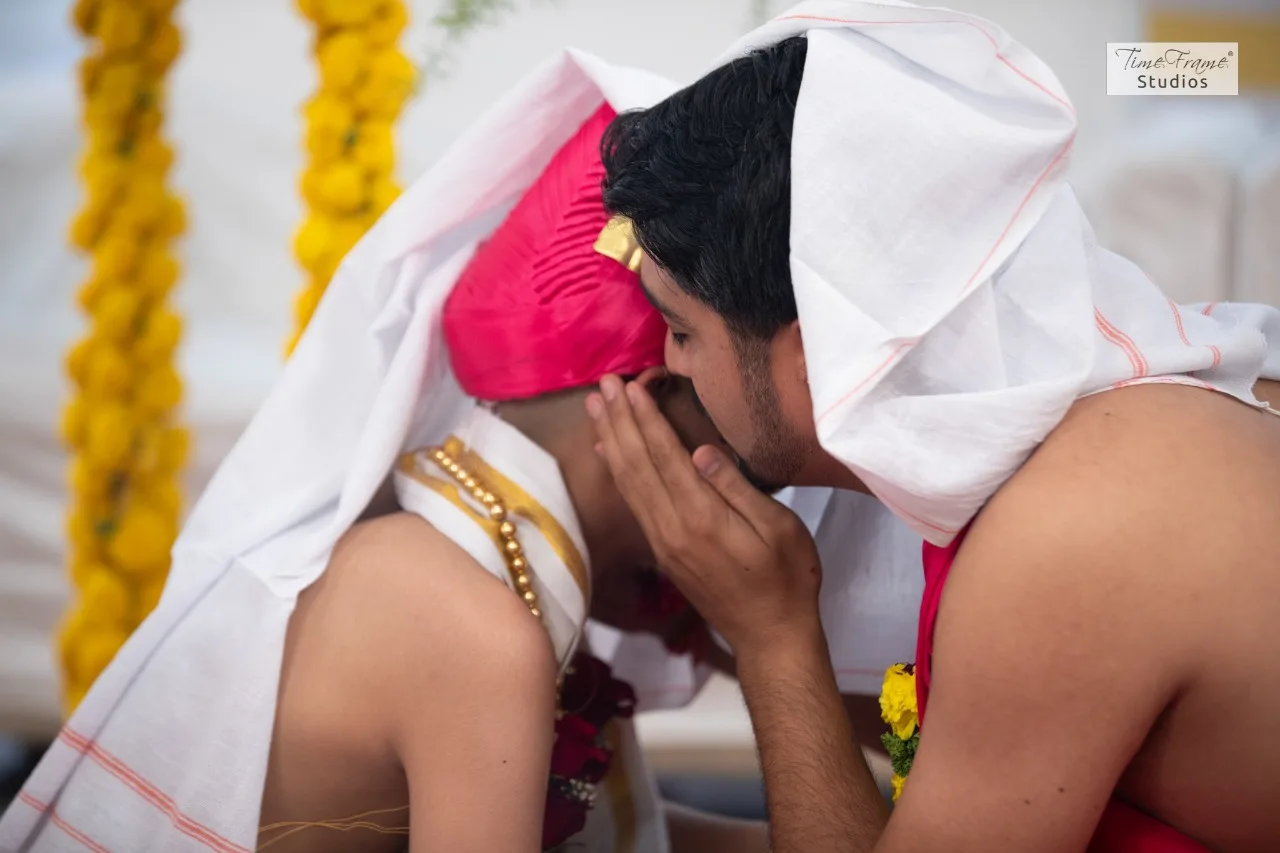
The father whispers the Gayatri mantra into the boy's ear, often with a cloth or shawl drawn over both of them so it's heard only by the boy. For many families this is the heart of the day.
Photographs to plan: the shawl over father and son, framed tightly; the moment the cloth is lifted; the expressions afterwards.
Bhiksha: asking for alms
The boy, as a new brahmachari, asks for bhiksha, alms, traditionally first from his mother and then from the women of the family. Relatives place rice, sweets or gifts in his bag.
Photographs to plan: the boy with his mother, then the line of relatives, each with the boy.
Havan and blessings
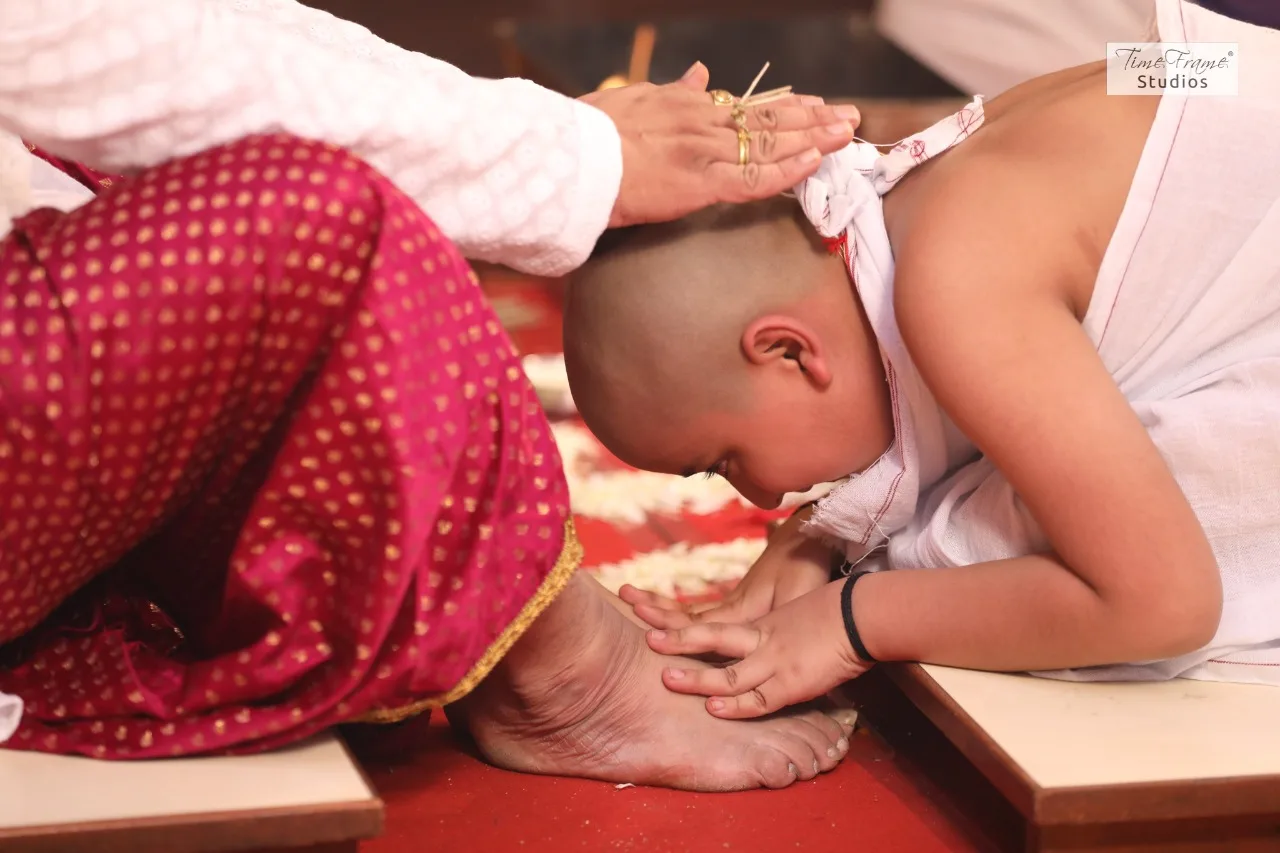
The boy offers ghee and samidha into the sacred fire with the priest, and then bows to his elders for their blessings. The blessings are many short moments in a row, and each family member will want theirs.
Photographs to plan: the boy at the fire, each elder blessing him, grandparents especially.
Kashi yatra (in some families)
In many Maharashtrian families, the boy sets off with his staff and a bag, symbolically leaving for Kashi to study, and a maternal uncle persuades him to stay. It's often played with great theatre and laughter.
Photographs to plan: the boy setting off, the uncle's persuasion, the family's reactions.
Family portraits and the celebration
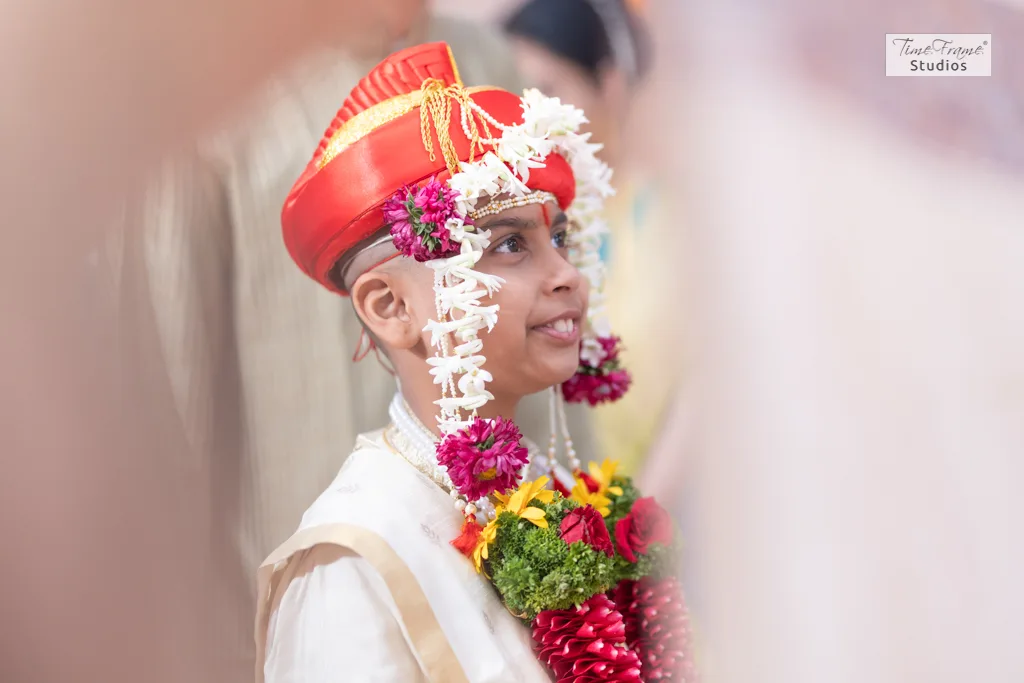
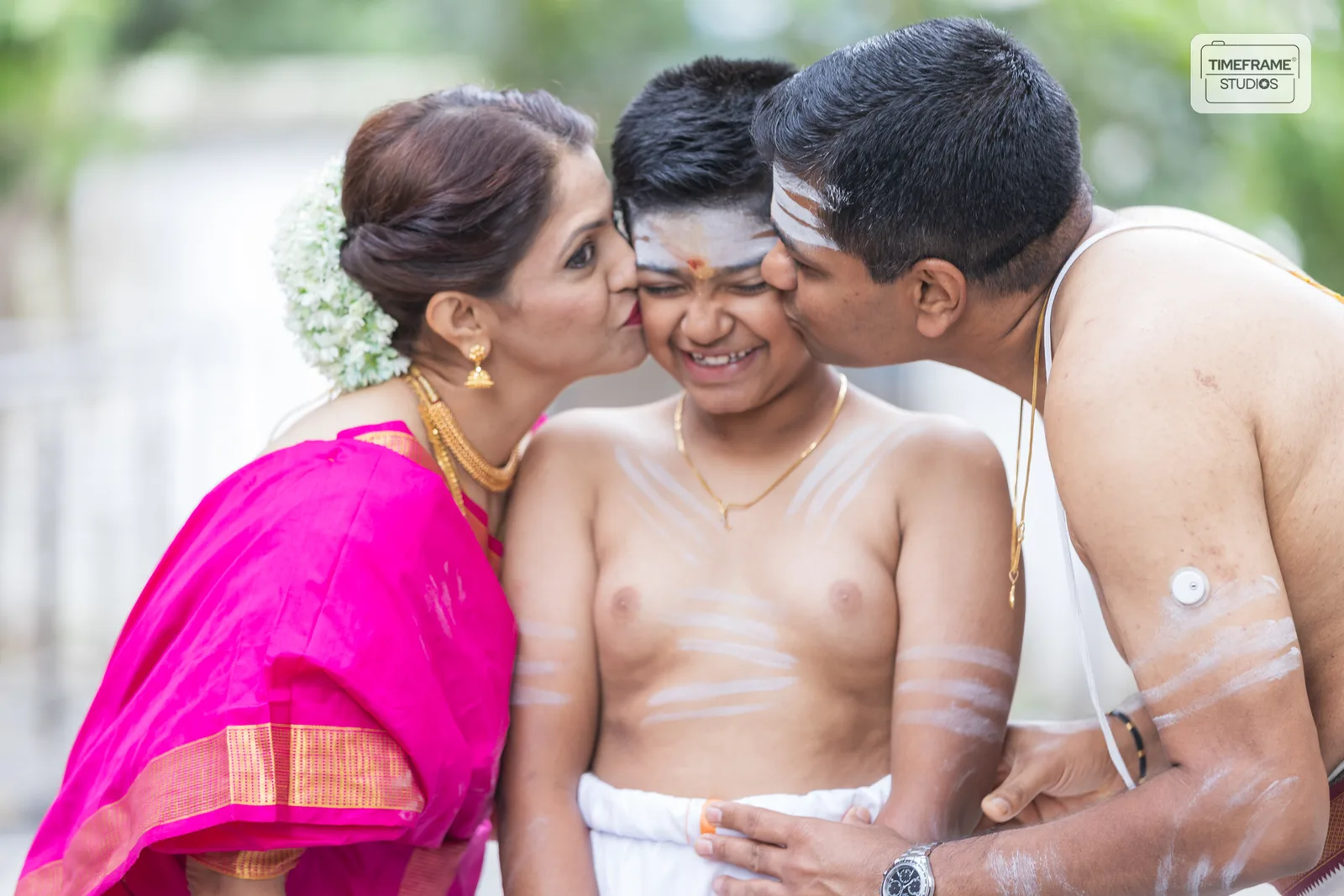
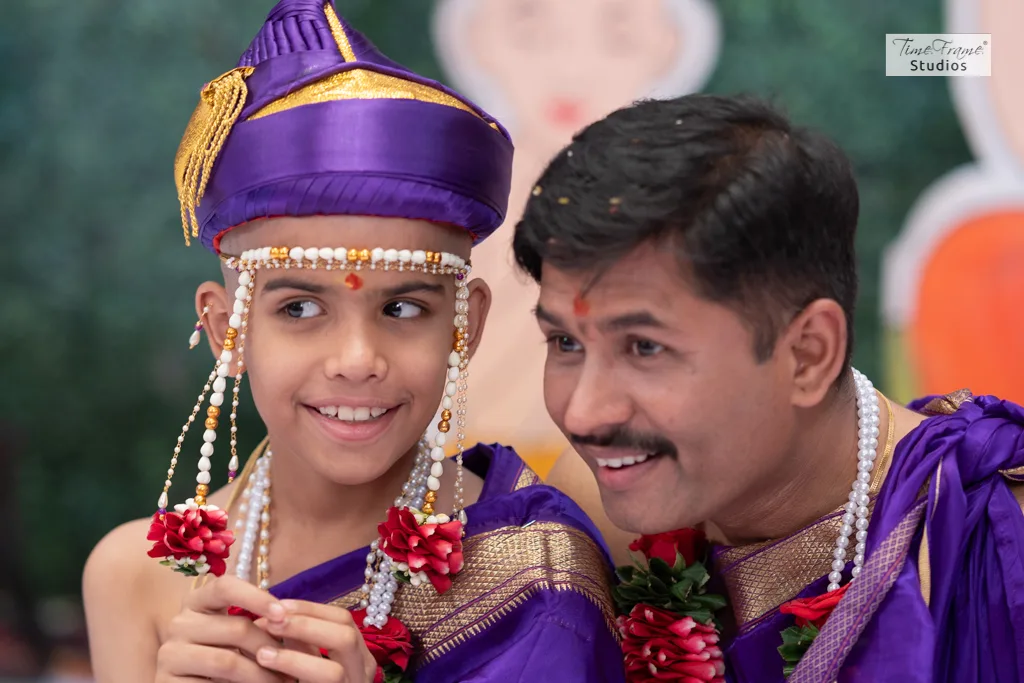
After the rituals, there's usually time for the boy in his pheta and festive clothes, portraits with parents, grandparents and siblings, and the full family. Plan this time with the priest and the venue so it isn't squeezed by lunch.
Frequently asked questions
What is the order of rituals in a Munj?
In most Maharashtrian families: Ganesh puja and the devak, the head shave and ritual bath, matru bhojan, dressing with the mekhala, the sacred thread, the Gayatri mantra, bhiksha, the havan and blessings. The exact order and timings vary by family and priest.
Which Munj rituals are most important to photograph?
The head shave and bath, matru bhojan, the sacred thread, the Gayatri mantra under the shawl, and the blessings from elders. They pass quickly, so share the order of rituals with your photographer in advance.
How long does a Munj ceremony take?
Most of the main rituals happen over a morning, with kelvan and mehendi on the days before. Your priest will give you the muhurat and timings.
Planning a Munj?
Sacred Thread is our Munj and Upanayan photography and film service, including designed albums of the day. Send us the date, venue and muhurat, and we'll come back with a plan and an exact quote.