Jewellery photography: making metal and stones look true on camera
Why jewellery so often looks flat or the wrong colour in photos, and how a studio shoot gets gold, silver and stones looking the way they do in the hand.
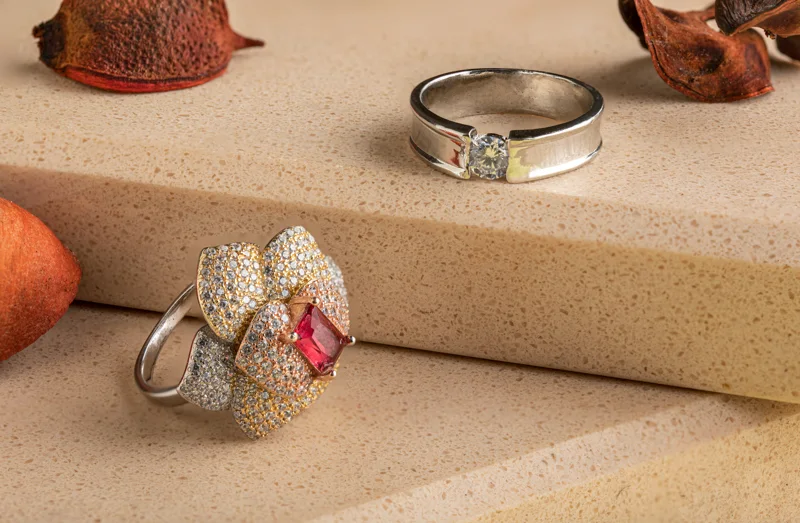
Jewellery is one of the hardest things to photograph well, and one of the easiest to photograph badly. A ring that sparkles across the counter can look flat, grey or the wrong colour in a quick photo. For a jeweller selling online, that gap between the piece and the picture costs sales and trust. This guide explains why it happens and what a proper jewellery shoot does about it.
Why does jewellery look different in photos than in person?
Because jewellery is made of mirrors. Polished gold, silver and faceted stones reflect everything around them: the room, the lights, the phone and the person holding it. In person your eyes move and the piece catches light from many angles; a photograph freezes one angle, so it shows whatever happened to be reflected at that moment. Good jewellery photography is mostly about controlling what the piece reflects.
Reflections: shape the light, don't just add it
On a jewellery set, the piece is surrounded by large, soft light sources and white or black cards, positioned so that the curves of a ring or the face of a pendant reflect a clean gradient instead of a cluttered room. That gradient is what makes metal look polished and three-dimensional.
- Gold needs warm, even highlights so it reads as rich yellow rather than brassy or pale.
- Silver and platinum need clean white and dark edges, or they turn grey.
- Stones need a little hard light to bring out sparkle and fire, without blowing out the highlights.
Colour: what arrives must match what they saw
Online, the photograph is the only way a buyer judges colour: the yellow of 22-carat gold, the pink of rose gold, the exact shade of an emerald or a ruby. If the photo is off, the customer feels misled when the parcel arrives, even if the piece is perfect. Colour should be set against a reference on set and checked in the edit, rather than left to filters that make it "pop".
Detail: sharp enough to zoom into
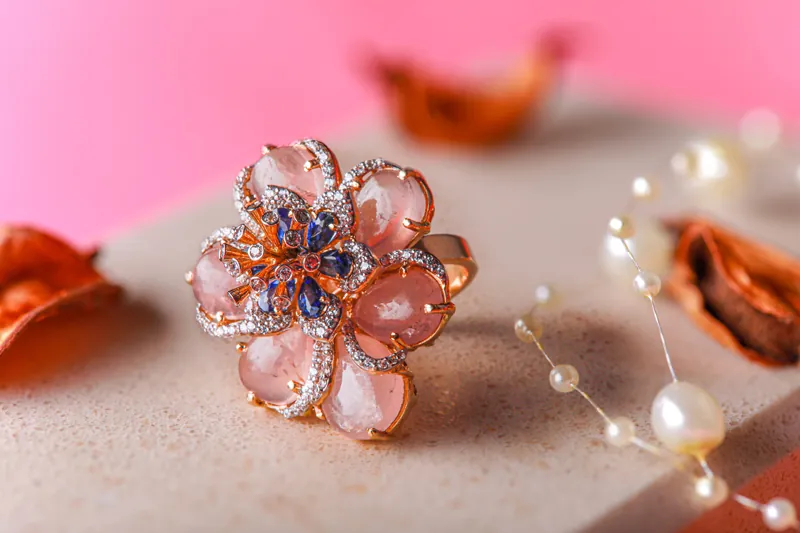
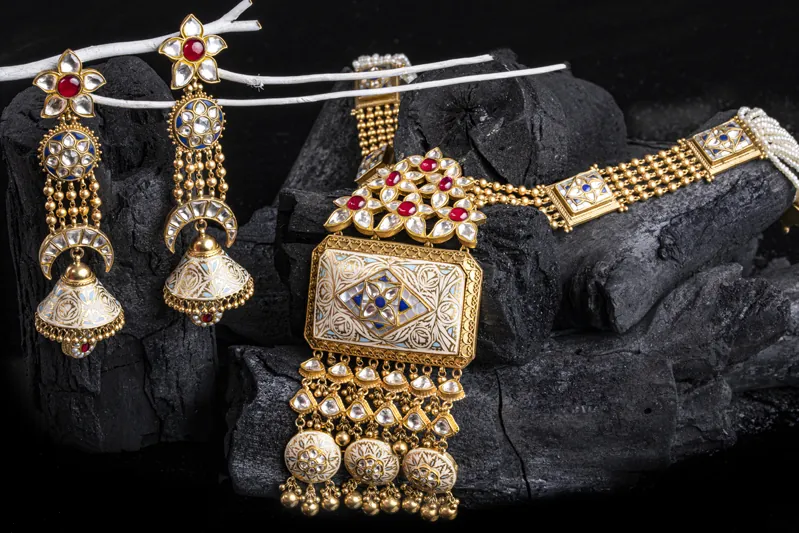
Customers zoom in on jewellery more than on almost any other product. Claws, settings, engraving, meenakari work and hallmarks all need to be sharp. That usually means a macro lens and, for larger pieces, several frames at different focus points combined into one image (focus stacking), so the whole piece is sharp from front to back. Dust and fingerprints show at this magnification too, so pieces need to be cleaned and handled with gloves.
White background or styled?
Most jewellers need both, for different jobs:
- White or plain background: for marketplaces, catalogues and product pages, where buyers compare pieces side by side. Consistent angles across a range make the store look organised. Check each marketplace's current image rules before the shoot.
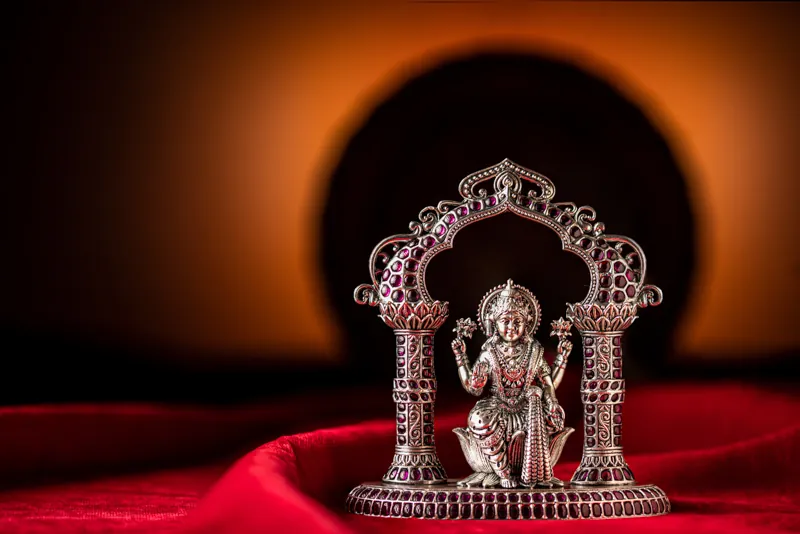
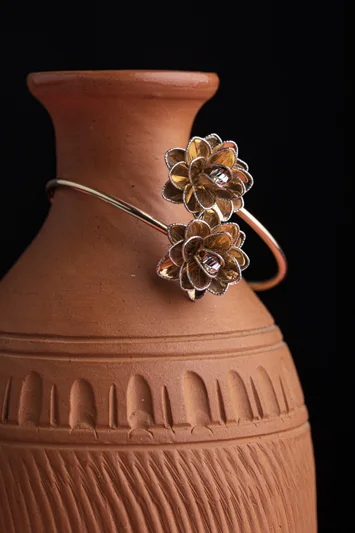
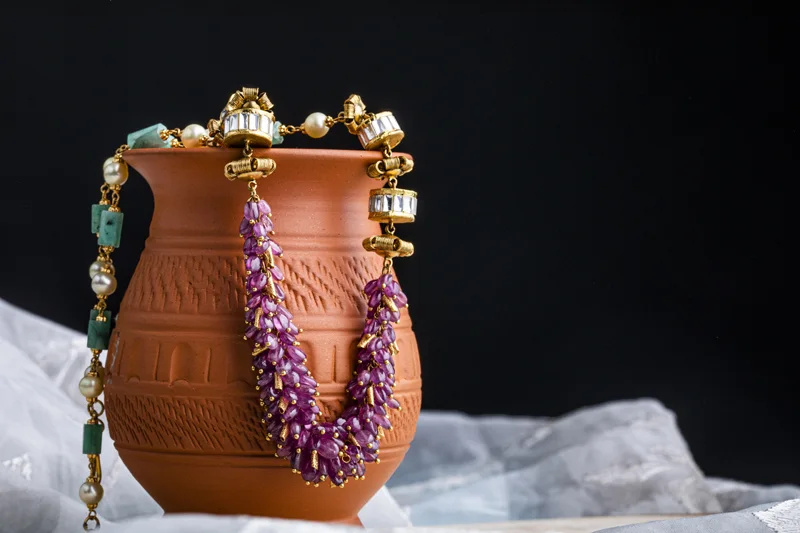
- Styled or lifestyle shots: for the first image on a product page, Instagram, ads and campaigns. Props and textures, such as stone, clay, fabric or flowers, give the piece context and mood without competing with it.
Our guide to white background or lifestyle product photos explains how to plan one shoot that covers both.
On a model: scale and how it's worn
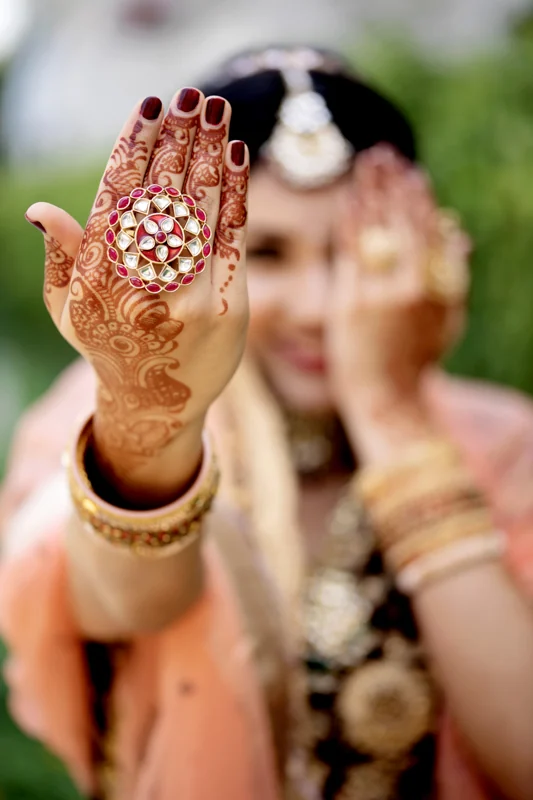
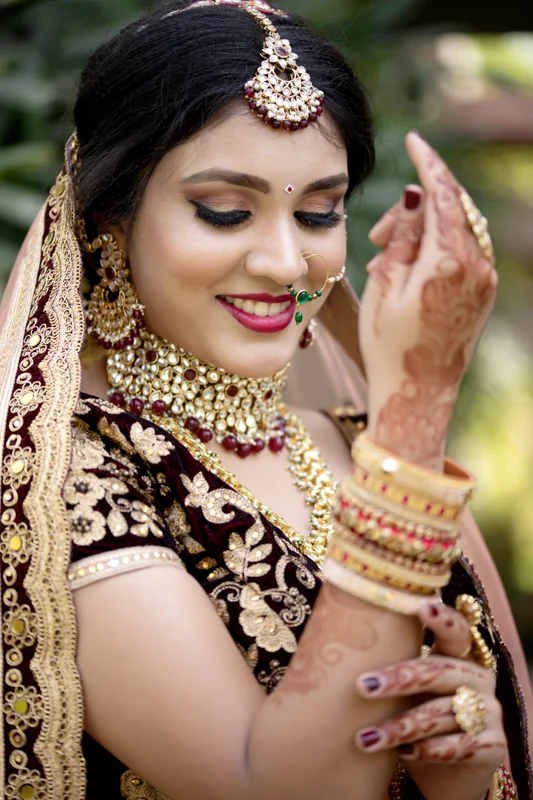
A ring on a hand or a necklace on a neckline answers a question a flat-lay can't: how big is it, and how will it look on me? Model shots are especially useful for bridal and statement pieces. Hands need a manicure and neutral nails so they don't compete with the piece.
Add video while the set is up
A few seconds of a ring turning under light shows sparkle in a way no still can. Short clips for reels and product pages are easiest to make on the same day, with the lighting already in place.
What about AI backgrounds?
AI tools can change the background around a ring in seconds. They can't fix the reflections, colour or sharpness of the piece itself, which are what make jewellery look valuable. Our article on AI backgrounds or a product photographer goes into what each one can do.
Preparing for a jewellery shoot
- Send a list of pieces, with any variants (metal colours, stone options).
- Mark the hero pieces that deserve styled shots or model shots.
- Share where the images will be used: your website, marketplaces, Instagram, print.
- Pack each piece separately and labelled. Our guide to sending products to a studio shoot covers packing and labelling.
Frequently asked questions
How do you photograph jewellery without reflections?
You don't remove reflections; you control them. Large soft lights and white or black cards are placed so the metal reflects clean gradients instead of the room.
Why does gold look dull in photos?
Usually because of mixed or cool light and incorrect white balance. Warm, even highlights and colour set against a reference keep gold looking like gold.
Do jewellery photos need a white background?
For marketplaces and catalogues, usually yes. For your own website's first image, Instagram and campaigns, styled backgrounds tend to work better.
Planning a jewellery shoot?
The Hero Shot is our food and product photography service, including jewellery on white, styled sets, model shots and product video, in our Pune studio. Send us your list of pieces and we'll come back with a plan.